
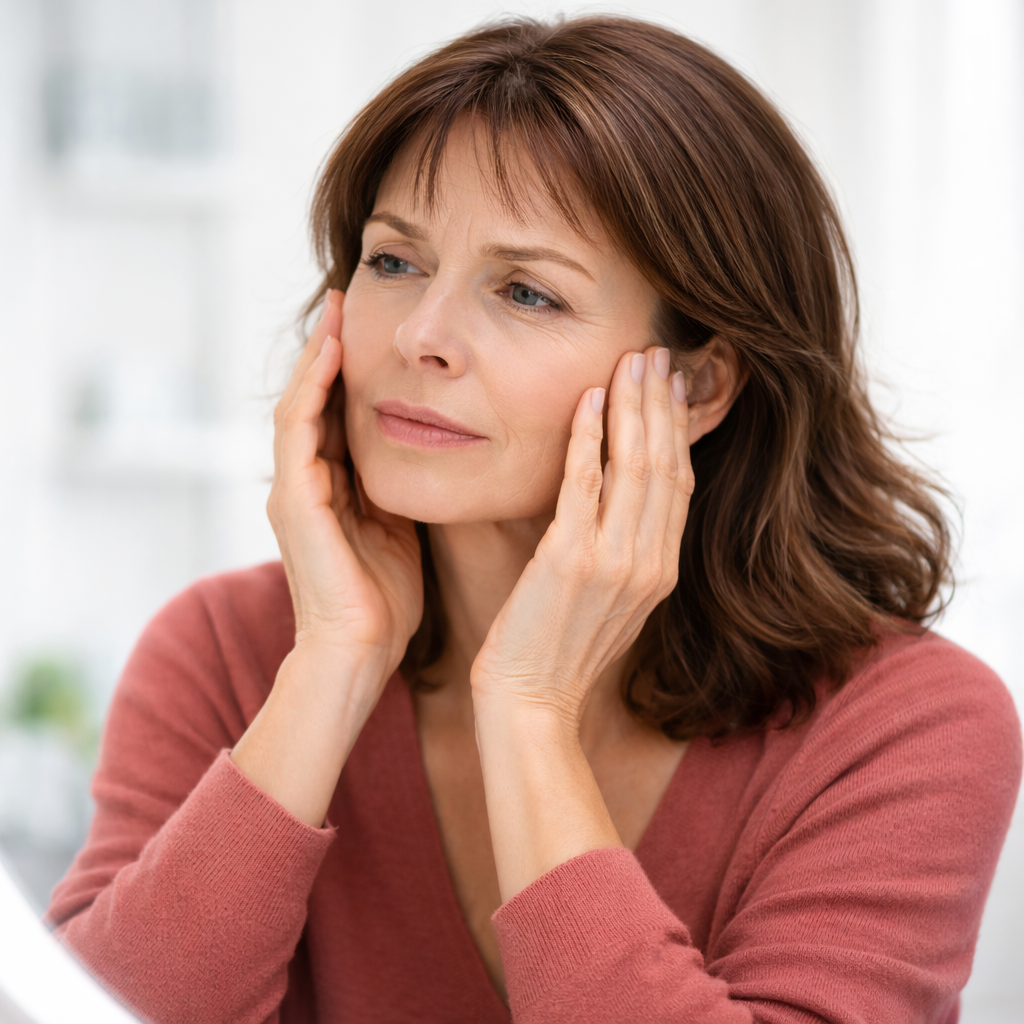
Peeling of the Facial Skin
Principles and Techniques in Skin Rejuvenation
Clinical observation has long shown that facial skin may appear tighter and smoother after healing from superficial burn injuries. This effect is mainly due to controlled damage to the epidermis and superficial dermis, followed by regeneration, collagen remodeling, and reorganization of elastic fibers. Based on this biological response, several techniques have been developed to deliberately and safely peel the facial skin in order to improve texture, pigmentation irregularities, and fine wrinkles.
It is important to emphasize that skin peeling targets skin quality rather than skin laxity. Therefore, while peeling techniques can significantly improve surface irregularities, they do not correct facial sagging, which requires lifting procedures.
Mechanical Peeling (Dermabrasion)
Dermabrasion is a mechanical method of skin peeling in which the outer layers of the facial skin are abraded in a controlled manner. Specialized rotary abrasive tools are used to remove the epidermis and part of the superficial dermis.
Commonly used instruments include:
-
High-speed rotary abraders
-
Diamond fraises
-
Sandpaper or wire brushes
Following dermabrasion, the treated skin becomes an open wound. During the healing phase, new epithelial cells migrate and collagen remodeling occurs, resulting in smoother and more uniform skin.
Key characteristics of dermabrasion:
-
Requires an operating room setting
-
Usually performed under local anesthesia with sedation or general anesthesia
-
Painful procedure
-
Downtime of 7–14 days, depending on depth
-
Strict sun protection is mandatory for several weeks after healing
Dermabrasion is particularly effective for:
-
Fine wrinkles
-
Acne scars
-
Superficial skin irregularities
-
Pigmentary spots
However, it does not improve skin laxity or deep wrinkles, and patient selection is crucial to avoid complications such as prolonged erythema, pigment changes, or scarring.
Peeling with Chemical Materials (Chemical Peeling)
Chemical peeling is based on the application of controlled chemical agents that induce a superficial skin injury, followed by regeneration.
Medium and Deep Chemical Peels
Two of the most established chemical peeling agents are:
-
Phenol–croton oil peeling (Phenol peeling)
-
Trichloroacetic acid (TCA) peeling
These agents cause a chemical burn of the skin to a predetermined depth. After wound healing, typically within 7 to 10 days, the regenerated skin appears tighter, smoother, and more uniform in color.
Advantages of chemical peeling:
-
Can be performed in outpatient settings
-
Lower cost compared to dermabrasion
-
Effective for:
-
Fine to moderate wrinkles
-
Sun-damaged skin
-
Pigment irregularities
-
Limitations and considerations:
-
Visible downtime during healing
-
Risk of pigment changes, especially in darker skin types
-
Requires careful patient selection and post-procedure care
Superficial Chemical Peels
Less aggressive agents such as alpha hydroxy acids (AHA) produce very superficial peeling. These peels:
-
Do not cause a visible wound
-
Have minimal downtime
-
Are safer and more comfortable
However, their clinical effectiveness is limited compared to medium or deep peels and usually requires multiple sessions to achieve noticeable improvement.
Peeling by Laser Light (Laser Resurfacing)
Laser peeling, also known as laser resurfacing, utilizes high-energy laser beams to vaporize superficial skin layers through thermal energy. Lasers are classified according to the wavelength of light they emit, which determines tissue interaction and depth of penetration.
Laser peeling allows:
-
Precise control of depth
-
Uniform treatment of the skin surface
-
Selective targeting of damaged tissues
Despite these technical advantages, laser resurfacing:
-
Is a painful procedure
-
Has a healing period similar to other invasive peeling methods
-
Produces a wound that must re-epithelialize over days to weeks
When properly applied, laser peeling can effectively improve:
-
Fine wrinkles
-
Acne scars
-
Sun damage
-
Skin texture irregularities
As with other peeling techniques, laser resurfacing does not lift sagging facial tissues and is often best combined with other facial rejuvenation procedures when indicated.
Choosing the Appropriate Peeling Method
The success of facial peeling depends on:
-
Skin type
-
Degree of photoaging
-
Presence of scars or pigment changes
-
Patient expectations
A thorough evaluation by an experienced plastic surgeon is essential to select the appropriate peeling technique, minimize risks, and achieve predictable, natural-looking results.


Leave a Reply
Want to join the discussion?Feel free to contribute!